17 November 2026 · 6 min read · Heathurst Coatings
To remove paint from a wall, scrape off anything loose, then sand, heat-strip or use a chemical stripper depending on the surface and how much paint has to come off. On most interior plaster walls you rarely need to strip everything: removing the loose and flaking paint and sanding the edges smooth is enough to repaint. Before you start on any home built before the 1970s, test the paint for lead, because the wrong removal method can spread lead dust through the house.
Do you need to remove all the old paint?
Usually not. Paint that is sound and well bonded is a good base for new paint. You only need to remove paint that is:
- flaking, peeling or blistering
- cracked through to the surface underneath
- built up so thickly that detail is lost, for example on cornices, mouldings or window sashes
- an incompatible finish that the new paint won't stick to without preparation, such as old gloss enamel under a water-based topcoat
Testing is simple. Press a strip of masking tape firmly onto the paint and pull it off quickly. If paint comes away with the tape, the area needs to come back further.
Is the old paint lead-based?
This is the first question to answer in an older Australian home. Paint with high levels of lead was used widely in homes built before the 1970s, and it is often still there under newer coats. Intact lead paint is not usually a problem. Disturbing it is: sanding, scraping, heat-stripping and burning all release lead dust or fumes, which are harmful, especially to young children and pregnant women.
- Test first. Lead test kits are sold at hardware stores, or a laboratory can test a paint sample.
- Never dry-sand, power-sand or heat-strip lead paint. Wet scraping and wet sanding keep dust down, and chemical strippers avoid dust altogether.
- Contain the work. Seal the room off with plastic sheeting, keep children and pets away, and clean up with a wet cloth or a vacuum with a HEPA filter rather than sweeping.
- Follow official guidance. The Victorian EPA and the Australian Government publish guidance on lead-safe renovating and on disposing of lead paint waste. Read it before you start.
If the test is positive and the area is large, this is a job for a painter experienced with lead-safe methods. Our heritage painting team deals with lead paint in older homes regularly.
What are the ways to remove paint?
Scraping
A sharp paint scraper removes loose and flaking paint quickly. Hold it at a low angle and work with the grain on timber. Scraping alone is often enough on walls that only have a few problem areas.
Sanding
Sanding feathers the edges of scraped areas so they don't show through the new paint, and removes thin layers of paint. Start with a coarse grit and finish with a finer one. On plaster, go gently so you don't gouge the surface. Wear a dust mask rated for fine dust, and never dry-sand paint that might contain lead.
Heat gun
A heat gun softens paint so it lifts off with a scraper. It works well on thick layers on timber, such as doors, skirtings and weatherboards. Keep the gun moving so you don't scorch the timber, keep it away from glass, which can crack, and never use it on lead paint. Avoid naked flames and blowtorches entirely.
Chemical paint strippers
Strippers soften paint so it can be scraped off, and they reach into mouldings and carved detail that scrapers and sandpaper can't. Choose a stripper suited to the paint type and surface, follow the label exactly, ventilate well, and wear chemical-resistant gloves and eye protection. Some strippers need to be neutralised or washed off before you repaint, so check the instructions.
Pressure cleaning (exteriors)
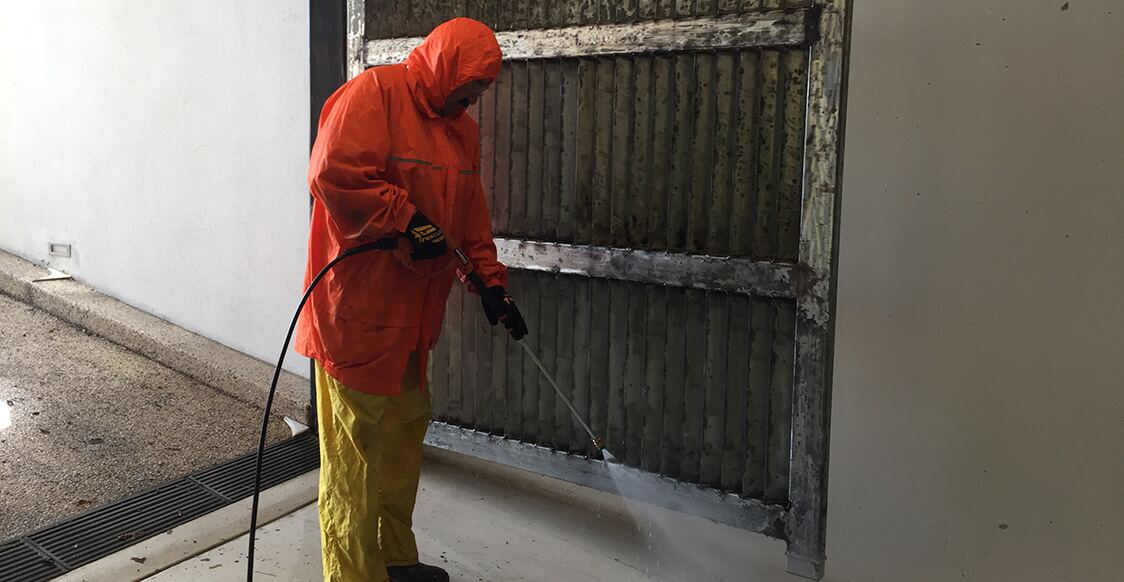
On exterior walls, a pressure cleaner removes dirt, chalky residue and loose paint before painting. It won't strip sound paint, and it can damage soft timber, old mortar and render if the pressure is too high, so start with a wide fan and keep the nozzle back from the surface.
How do you get paint off interior walls?
- Cover floors and furniture, and turn off power to any outlets you are working near.
- Scrape off loose and flaking paint.
- Sand the edges of the scraped areas until you can't feel a step with your fingertips.
- Fill any dents or gouges with a suitable filler, let it dry and sand it smooth.
- Wipe the wall down to remove dust.
- Spot-prime bare plaster and filled areas before you paint.
If the wall has many layers of paint that are failing all over, a chemical stripper is usually less damaging to the plaster than heavy sanding. On old lath-and-plaster walls, go carefully: the plaster can be soft and is easy to damage.
How do you remove paint from timber and wooden floors?
Timber needs more care than plaster because it is softer and the grain shows every mark.
- Doors, skirtings and trims: a heat gun or chemical stripper removes thick layers best. Follow up with a scraper and a fine sanding along the grain.
- Small paint drips and splashes on floorboards: while the paint is fresh, wipe it up with a damp cloth for water-based paint, or the recommended solvent for oil-based paint. Dried drops can often be softened with a little warm soapy water and lifted with a plastic scraper, which won't scratch the finish.
- Painted floorboards you want back to bare timber: the usual approach is a chemical stripper followed by sanding, or sanding alone with a floor sander for large areas. Floor sanding is skilled work: it is easy to leave dips and marks, and old floors may hide lead paint, so test first.
- Decks and outdoor timber: a deck stripper and a stiff brush or pressure cleaner removes old coatings before re-oiling or staining.
How do you remove paint from exterior walls?
On a house exterior, the goal is to remove everything that isn't firmly stuck so the new paint has a sound base.
- Weatherboards: scrape off flaking paint, sand the edges, and heat-strip or chemically strip areas with many failing layers. Prime any bare timber the same day so it doesn't weather.
- Render and masonry: pressure clean, scrape loose paint, and treat any chalky surface with a suitable sealer or binding primer before painting.
- Metal: remove flaking paint and rust with a wire brush or abrasive, then use a rust-inhibiting primer.
Our guide to painting a house exterior covers the rest of the preparation and painting order.
What is the fastest way to remove paint?
For a few flaking areas, a sharp scraper and sandpaper are fastest. For thick layers on timber, a heat gun is quick, but only if the paint is lead-free. For detailed surfaces or large areas of old paint, a chemical stripper does the work while you wait. There is no fast and safe method for lead paint: it needs to be removed slowly, wet, and contained.
When should you call a painter instead?
Consider getting a professional in when:
- the paint tests positive for lead, or you can't be sure
- the job is a whole room, a whole exterior or a whole floor
- the work is at height, such as eaves, fascias or a second storey
- the surface is delicate, such as old lath-and-plaster, ornate mouldings or a heritage facade
Preparation is the part of painting that decides how long the new paint lasts, and it's where we spend most of our time on every job. See our exterior painting and heritage painting services for how we prepare walls, timber and render.
Rather have it done for you?
Heathurst prepares and paints homes and commercial properties across all of greater Melbourne, from the eastern suburbs to the bayside and the west. Request a free on-site quote through our contact page, or call 0418 351 120.